
Podcasts
What if the highest form of leadership is love—and the clearest proof of love is accountability? We sit down with retired U.S. Coast Guard commander and culture-change consultant Patti Tutalo to dig into the mechanics of humane leadership that actually improves readiness. Patty shares hard-won insights from operations, Pentagon policy, and a landmark women’s retention study that revealed a painful truth: people don’t leave because of one bad day; they leave after a thousand small cuts. From hair and nail rules used as weapons to leaders rewarded for numbers while neglecting their teams, she maps how systems quietly push talent out—and how to fix them.
What happens when “service before self” collides with the limits of a human soul? We sit down with veteran, board-certified psychotherapist, and spiritual transformation coach Malaysia Harrell to unpack moral injury, the stigma around getting help, and why healing takes more than motivation. Malaysia’s path runs from the Air Force and the U.S. Public Health Service to senior roles in addiction medicine and presidential support, giving her a rare view of how policy, culture, and people intersect. She shares unflinching stories from deployments and the Afghanistan withdrawal, where lawful actions still left deep ethical scars—and where guilt weighed on those who deployed and those who never could.

A Friday shift, a crowded Walmart, a woman advancing with a hatchet—then two shots that changed countless lives. Captain Adam Meyers walks us through that moment with uncommon clarity, and then opens the door to what most people never see: the months and years of fallout, the moral injury that lingers even when policy is followed, and the stigma that punishes honesty more than failure. It’s a story about survival, but also about systems that make survival harder than it should be.
We talk about cumulative stress in policing and how it mirrors the tempo of military life: long stretches of routine spiking into chaos with no time to reset.
Grief doesn’t wait for business hours, and it rarely shows up when your therapist is free. That’s why we sat down with Guardian [Ai]ngels founder and CEO John Cammer to unpack a bold idea: a guided journal that “talks back,” offering compassionate, structured prompts and immediate responses designed to help you accept the loss, process the pain, and carry the bond forward. Built with licensed grief therapists and grounded in Worden’s Four Tasks of Mourning, Guardian [Ai]ngels uses AI to reflect the relationship you already hold within you—not to imitate a voice from the past, but to give your story a safe place to land.
Speaking up about wrongdoing shouldn’t cost you your career or your well-being—yet quiet retaliation is a reality for far too many. This week, we talk with Dr. Jackie Garrick, founder of Whistleblowers of America, about what moral injury looks like in everyday workplaces and how to navigate reporting without going it alone. From subtle silencing tactics to practical steps for documenting concerns, seeking support, and staying safe, this episode offers real-world tools for anyone who cares about ethics, accountability, and psychological safety.
When life grows, the inner critic often grows louder. In this episode, we sit down with Dr. Elizabeth Fulgaro—award-winning author, songwriter, and financial coach—to explore how song-driven prayer and simple journaling can transform self-talk, rebuild resilience, and heal hidden wounds, especially for women veterans.
Dr. Fulgaro shares her journey from self-hatred to self-love and introduces a 28-day practice that pairs curated “song prayers” with quick daily reflections. Participants experience measurable improvements in resilience and well-being, as music engages the emotional brain, lyrics reinforce belonging and purpose, and journaling anchors a new, empowered identity.
The deepest wounds aren’t always visible—they whisper that you’re not enough. In this powerful conversation with a VA chaplain, Army veteran, and moral health scholar, we explore moral injury as a fracture of identity rooted in shame, not just a set of symptoms. Together, we distinguish fear-based PTSD from the moral pain that follows betrayal, military sexual trauma, and violations of conscience—and uncover why true healing depends on truth, presence, and belonging.
Through a four-part model of moral health—belief, identity, integrity, and responsibility—we examine how trauma erodes trust and connection, and how honest community and nature-based healing can begin to restore them. For women veterans, caregivers, and anyone living in the aftermath of moral harm, this episode offers language, tools, and hope: healing isn’t about forgetting—it’s about remembering differently, together.

Air Force Reserve Chaplain and MISNS Board Member Lindsey Moser joins the Welcome Home Podcast to explore moral injury—the deep emotional and spiritual wounds that arise when service members face betrayal or actions that violate their core values.
Lindsey highlights why women in uniform are uniquely affected and shares how holistic support—from chaplains, clinicians, and the MISNS Harriet Tubman Network—can restore hope, resilience, and dignity.
Dr. Daniel Roberts, recently joined MilSpouse Transition for a powerful conversation on moral injury — a wound that many in the military community have lived with, often without a name.
In this episode, Dr. Roberts unpacks what moral injury truly is, why it matters, and how naming it becomes the first step toward healing.
He addresses how oral injury differs from PTSD, and how for military spouses, it can also arise from years of feeling silenced, unsupported, or carrying invisible burdens alone. And its impact doesn’t stay in the past — it surfaces in transition, in relationships, and in how people understand their own worth.
What happens when a warrior comes home and the mission ends? For Anthony Dyer, a Combat Special Missions Aviator turned author, the battles didn’t stop when the gunfire ceased. His journey reveals the hidden struggles veterans face long after service.
Anthony carried resilience into an Air Force career that spanned 200+ combat missions and earned him the Jolly Green Rescue Mission of the Year in 2018. Yet behind the honors were haunting memories, including a mission in East Africa that saved lives but left him burdened with loss.
Listen as he tells his story of how therapy, support and family helped him heal.

Military service leaves marks we can’t always see—and those wounds don’t stop with the service member. In this episode, Dr. Marg Rogers sheds light on how moral injury and service-related trauma ripple through entire families, especially the children who often don’t understand why a parent has emotionally withdrawn. Drawing from her personal and professional experience, Dr. Rogers shares the unique challenges military and first responder families face, from constant relocations to disrupted support systems—and how her team’s free, research-based Child and Family Resilience Programs are helping families heal together.
When Jenna Carlton left the Navy in 2017 after serving as an aerographer’s mate, she faced a question that would fuel her mission: “Where are all the younger veterans?” This powerful conversation reveals how she’s addressing that gap through community building and targeted resources.
Fresh from her military experience, Jenna shares candidly about the realities women face in service—sexualization, harassment, and the personality shifts many adopt for self-protection. Her journey took her to Capitol Hill, where she hoped to influence veteran policy, only to discover that grassroots community building would be her most effective path forward.

What happens when your personal values collide with the organization you’re expected to serve? For military women, this clash often leads to a profound sense of moral injury that can impact every aspect of life.
Shelly Rood brings a refreshingly candid perspective to this challenging reality. As a former military intelligence officer who now coaches high-achieving leaders, she shares powerful insights about navigating the tension between excellence and authenticity. The conversation takes us beyond typical military discussions into the raw, human experience of feeling perpetually at odds with systemic expectations.
Moral injury remains one of the most misunderstood challenges facing women veterans today. Unlike PTSD, moral injury hides beneath the surface—characterized by shame, guilt, and internal conflict rather than outward distress.
Dr. Daniel Roberts takes listeners through an illuminating exploration of how to recognize these hidden wounds. Drawing from his upcoming book “Moral Injury: A Guidebook for Women Veterans,” he outlines the subtle yet profound indicators that something isn’t right.
Lieutenant Colonel Alea Nadeem shares her powerful journey from childhood trauma to military leadership and public service. Kidnapped by her father at age 8 and taken to Iraq, Alea returned to the U.S. years later to rebuild her life—eventually rising through the Air Force ranks to become a commander and policy change-maker. In this episode, she opens up about the long-term impact of abandonment, her fight to modernize military regulations for servicewomen, and her newest mission: running for Congress in her hometown of Toledo, Ohio.
Have you ever wondered what happens when your entire world changes in an instant? When the person you thought you were suddenly doesn’t exist anymore? Kijuan Amey’s powerful story answers these questions with unflinching honesty and remarkable hope.
After ten years in the Air Force as an in-flight refueling specialist, Kijuan’s life trajectory changed forever when a motorcycle accident claimed his eyesight in 2017. Waking up in darkness, he faced the devastating reality that his military career, independence, and future plans had vanished overnight. “I went from being this super independent 25-year-old to now being this crazily dependent 25-year-old,” Kijuan reflects, describing the depression and suicidal thoughts that followed.
Dr. Daniel Roberts pulls back the curtain on an overlooked trauma affecting thousands of military women—one that doesn’t yet have a household name. As president of the Moral Injury Support Network for Service Women, he reveals how violating one’s deeply held moral code creates wounds different from PTSD but equally devastating.
The conversation begins with shocking real-life examples. Conservative estimates suggest at least one in four female service members experiences moral injury, whether from a single traumatic event or death by a thousand cuts of daily disrespect and harassment.

What does it take to keep moving forward when life hits you with its absolute worst? Andy Campbell has endured childhood sexual abuse, lost his mother at an early age, become estranged from his father, battled stage four pancreatic cancer, and faced the devastating suicide of his youngest son. Yet somehow, he’s not only survived—he’s found a way to thrive.
In our conversation, Andy reveals the transformative power of his “15 core beliefs”—principles that have carried him through what would crush many of us. “No one outruns the universe,” he shares, explaining how the pain we try to escape will inevitably catch up with us. Instead of running, Andy advocates facing our challenges directly, allowing us to eventually move beyond mere survival into truly living.
Retired Colonel Lisa Carrington Firmin, psychologist Dr. Pat Pernicano, and retired chaplain Kerry Haynes come together to explore the often misunderstood impact of moral injury—a deep inner wound caused by the violation of one’s moral or ethical code. Drawing from Lisa’s personal experiences with combat and military sexual trauma, and Pat and Kerry’s development of Acceptance and Forgiveness Therapy (AFT), the discussion delves into how moral injury affects a veteran’s sense of identity, worth, and connection. Through powerful metaphors, poetry, storytelling, and the “cracked glass bowl” healing exercise, the trio highlights how creative expression and community support can open the door to post-traumatic growth. This episode offers veterans, loved ones, and care providers meaningful insight into how healing can begin—through story, connection, and compassion.
Emie Clevenger, a Navy veteran turned nonprofit founder, shares her journey of transforming personal hardship into advocacy through Period Kits North Carolina. Motivated by her own struggles with period poverty as a child, Emie now leads efforts to provide menstrual products to those in need. The episode sheds light on menstrual inequality in North Carolina, where one in six women lack access to basic hygiene supplies.
Emie also opens up about the challenges faced by women in the military, including gender-based exclusion and trauma, explaining why many women veterans often stay quiet about their service. Her story connects these experiences to her current mission of promoting menstrual equity with empathy and action.

As healthcare professionals, first responders, and veterans, the weight of difficult decisions and traumatic experiences can take a toll on our well-being. It’s easy to feel isolated, burdened by guilt, or unsure of how to move forward.
Know that healing is possible.
In this session with Dr. Deborah Howell, we delve into Rebuilding Your Identity After Trauma: A Path to Healing and Wholeness.
Behind the uniform, beyond the homecoming ceremonies, military families face a battlefield few civilians ever witness. The invisible wounds of moral injury and PTSD transform homes into pressure cookers of tension, where walking on eggshells becomes a survival skill and children absorb trauma they don’t understand.
Drawing from twenty revealing interviews with military spouses, Dr. Daniel Roberts exposes the harsh realities these families endure. Service members struggle with intrusive thoughts, memory problems, emotional detachment, and hypervigilance – often undiagnosed and untreated due to stigma or career concerns. When flashbacks strike or nightmares turn violent, the entire household pays the price. Meanwhile, spouses become everything at once: caregiver, breadwinner, parent, and emotional punching bag, all while receiving minimal support themselves.

Elizabeth Estabrooks takes us on a profound journey through trauma, healing, and the unexpected paths to recovery in this eye-opening conversation about her new book “Broken in the Stronger Places: From Resilience to Resourcefulness.”
Drawing from three decades working with survivors of personal violence, Estabrooks challenges the popular metaphor that trauma makes us “stronger in the broken places.” While many embrace the Japanese art of kintsugi—repairing broken pottery with gold—as a symbol of trauma recovery, she reveals a more complex truth: trauma never truly disappears. Even after extensive healing work, re-traumatization can occur through national events or personal triggers, shattering those supposedly strengthened places.

This powerful episode shines a light on the struggles military families face when moral injury extends beyond the battlefield and into the home. Through research with MISNS and Thomas Jefferson University, we explore personal stories from military spouses, revealing how PTSD and moral injury affect not only service members, but entire families.
Whether you’re a military spouse, veteran, or care provider, this conversation offers valuable insights, practical advice, and connections to organizations working to support military families.

Join us for an inspiring conversation with Dr. Amelia Duran Stanton, a distinguished U.S. Army Colonel with 32 years of service, as she shares her journey from enlisted soldier to leader, mentor, and author. In her book The Lotus Within, Dr. Stanton empowers women to strategically plan their futures, master time management, and find balance. Discover insights on career transitions, personal growth, and the pursuit of ikigai—the harmony of passion, vocation, profession, and mission.
After spending over $100,000 on her own divorce, Vicky Townsend saw firsthand the predatory nature of the family law system. Now, as the founder of Divorce Right and Fairwell, she’s on a mission to transform the divorce experience into a kinder, more affordable process.
In this episode, Vicky shares her personal journey and insights on minimizing the financial and emotional toll of divorce—especially for first responders and military personnel, who face unique challenges in their relationships. She explores the tough choices individuals face in toxic relationships, the impact on children, and how informed, fearless decisions can lead to healing and stability.
Discover the profound impacts of moral injury on veterans and their families with insights from Dr. Daniel Roberts, president and CEO of the Moral Injury Support Network for Service Women Incorporated. Explore how feelings of shame, guilt, and self-blame can lead to serious challenges such as homelessness, substance abuse, and social isolation. We promise you’ll gain a deeper understanding of moral injury as we differentiate it from PTSD, and learn why this distinction is crucial for effective support and recovery. Through the compelling story of Faith, a Hispanic woman dealing with racism-induced moral injury, we illustrate the real-life consequences and encourage a compassionate approach to healing.

Unlock the mysteries of moral injury with Dr. Daniel Roberts as we journey into a realm often overshadowed by PTSD. What truly sets moral injury apart from other psychological wounds? This episode promises to enrich your understanding by delving into the intricate layers of moral injury, exploring its roots in experiences of betrayal, trauma, and ethical conflict. Through heartfelt stories and reflections, we aim to shed light on how moral injury manifests in various communities, including women veterans, racial minorities, and those facing sexual identity discrimination, emphasizing the vital need for recognition and tailored care.

What if you could find a way to support your loved ones through the toughest times while also taking care of yourself? Join us for an insightful conversation with Dr. Daniel Roberts and clinical psychologist, Dr. Michelle Sherman as we uncover the crucial support systems for families touched by trauma and mental illness. This episode sheds light on the significance of trauma-informed educational approaches.

What happens when the invisible wounds of service go unspoken? In this episode, we delve into the hidden struggles of moral injury and its profound impact on our service women. Learn what sets moral injury apart from PTSD and how experiences like betrayal by authority figures and high-stakes decisions leave lasting scars.
A Conversation with Dr. Rita Nakashima Brock. Click the button below to watch the full episode!

Lyceum at Wingate University. Click the button below to watch the full episode!


Discover the emotional realities and valuable lessons from veteran caregiving with our guests, Shawn Moore and Natasha Swayze. In this episode, we highlight Shawn’s transformative journey from founding Caregivers on the Homefront in 2017 to its evolution into Operation Frontline Families. Learn how Shawn and Natasha are revolutionizing support systems for military families, emphasizing the importance of mental health and youth-focused programs.

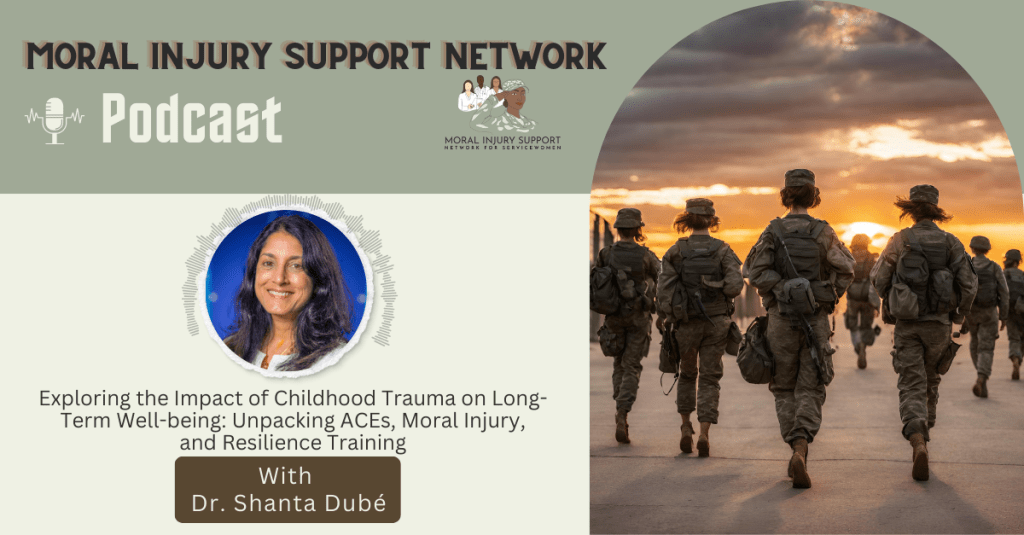
Discover the profound connections between early childhood trauma and long-term well-being with Dr. Shanta Dubé, a trailblazer from the CDC Kaiser Adverse Childhood Experiences (ACE) study, who graces our podcast with her extensive knowledge. Delving into the ACE study’s revelations, we learn how these experiences shape not just physical and mental health, but also spiritual development, highlighting the concept of moral injury and its pervasive influence. Dr. Dubé’s insights promise to enlighten those curious about the lasting imprints of childhood experiences on our lives.

When the weight of choice teeters between life and death, how does one find grounding in their decisions? Dr. Sarah Archer’s voice trembles with the raw emotion of her time in Rwanda, post-genocide, as she maps the treacherous terrain of moral injury for us. Her candid recollection of reverse triage, the emotional toll it exacted, and her quest for solace through faith and service reverberate through the episode, offering a stark, humane look at the cost of crisis.

Are you ready to unravel the depths of moral injury? Join us as we delve into this profound topic with our esteemed guest, Dr. Amanda Yeck. Together we’ll explore a realm of suffering that affects us biologically, psychosocially, and spiritually. We’ll take a leap into the comparison of moral injury and PTSD, unmasking the unique characteristics and challenges of each.
In this podcast, Dr. Dan Roberts, Jamie Peer, and Mantay Toure will describe moral injury and many context in which it manifests, discuss Moral Injury Support Network for Servicewomen Inc.’s mission, and talk about MISNS’ long-term goals of helping millions of women veterans suffering from moral injury.
Start Healing from Moral Injury: Dr. Roberts as a guest on this podcast with Sybil Cummin.