
Leadership is often discussed in terms of vision, resilience, strategy, and influence. But there is
a quieter, less visible dimension of leadership that many people never talk about, and yet it
shapes leaders more deeply than any title or achievement ever could. That dimension is moral
conflict, and when it goes unresolved, it can become what many of us know as moral injury.
Moral conflict happens when a leader’s internal values collide with external expectations. It is
the moment when what you are asked to do, or what circumstances force you to witness, feels
misaligned with what you know to be right. It is not always loud or dramatic. Sometimes it is
subtle, cumulative, and quiet, built over years of decisions made under pressure.
I know this experience intimately. I have served in environments where performance was
prioritized over people, where systems demanded efficiency while the human cost was quietly
absorbed by those expected to lead. On paper, leadership looked successful. Internally, there
were moments when the weight of responsibility felt heavier than anyone could see.
Moral injury does not come from weakness. It comes from caring deeply.
Leaders often stand at the intersection of competing truths. They must make decisions that
impact livelihoods, communities, and futures. They carry the burden of knowing that every
choice leaves someone disappointed or affected. Over time, when leaders repeatedly act
against their internal compass, even for “good reasons,” something begins to fracture inside.
The body feels it. The nervous system remembers it. The mind rationalizes it, but the soul does
not easily forget.
This is where many leaders begin to struggle in silence.
From the outside, they appear composed and capable. Internally, they wrestle with guilt,
exhaustion, or a quiet sense of disconnection from themselves. They may become more
guarded, more transactional, or emotionally numb, not because they lack empathy, but because
their capacity has been stretched beyond what they know how to process.
The problem is that leadership culture rarely makes room for this conversation. We praise
endurance. We celebrate grit. We reward those who keep going, even when going forward
comes at the cost of their own humanity. Leaders learn to perform strength rather than
experience wholeness.
But moral conflict unaddressed does not disappear. It accumulates.
I have come to believe that healing moral injury begins with honesty. Leaders must be willing to
ask themselves difficult questions: Where have I abandoned my own values in the name of
success? Where have I confused survival with leadership? Where have I silenced my intuition
because the system rewarded compliance?
These questions are not about blame. They are about reconciliation.
True leadership is not the absence of moral conflict, it is the willingness to engage with it
consciously. It requires humility to acknowledge that we have made decisions we wish we could
revisit. It requires courage to realign our leadership with integrity, even when that alignment
comes with risk.
The most transformative leaders I have encountered are not those who never struggled. They
are those who allowed their struggles to deepen their humanity. They learned that authority
without alignment leads to burnout, but leadership grounded in values creates sustainability.
When leaders begin to heal their moral conflicts, several shifts happen. They listen differently.
They lead with more empathy. They stop seeing people as roles or outcomes and begin seeing
them as whole human beings. They create environments where psychological safety matters as
much as productivity. They recognize that ethical leadership is not just about policies, but about
presence.
There is also a personal liberation that occurs. Leaders realize they do not have to choose
between effectiveness and integrity. They can lead with both strength and softness, clarity and
compassion. They can make decisions that honor results without abandoning their humanity.
In my own journey, I have learned that the greatest leadership transformation comes not from
learning how to carry more, but from learning what to release. The need to prove. The pressure
to be perfect. The belief that leadership means self-sacrifice without boundaries.
Moral conflict teaches us something essential: leadership is not simply about guiding others. It is
about staying connected to yourself while you do it.
The future of leadership, especially in a world moving faster than ever, will not be defined by
who can endure the most pressure. It will be defined by who can remain ethically grounded,
emotionally aware, and human in the face of complexity.
Because the truth is this: people do not just follow strategy. They follow integrity.
And when leaders heal their own moral injuries, they give others permission to lead from
wholeness too.
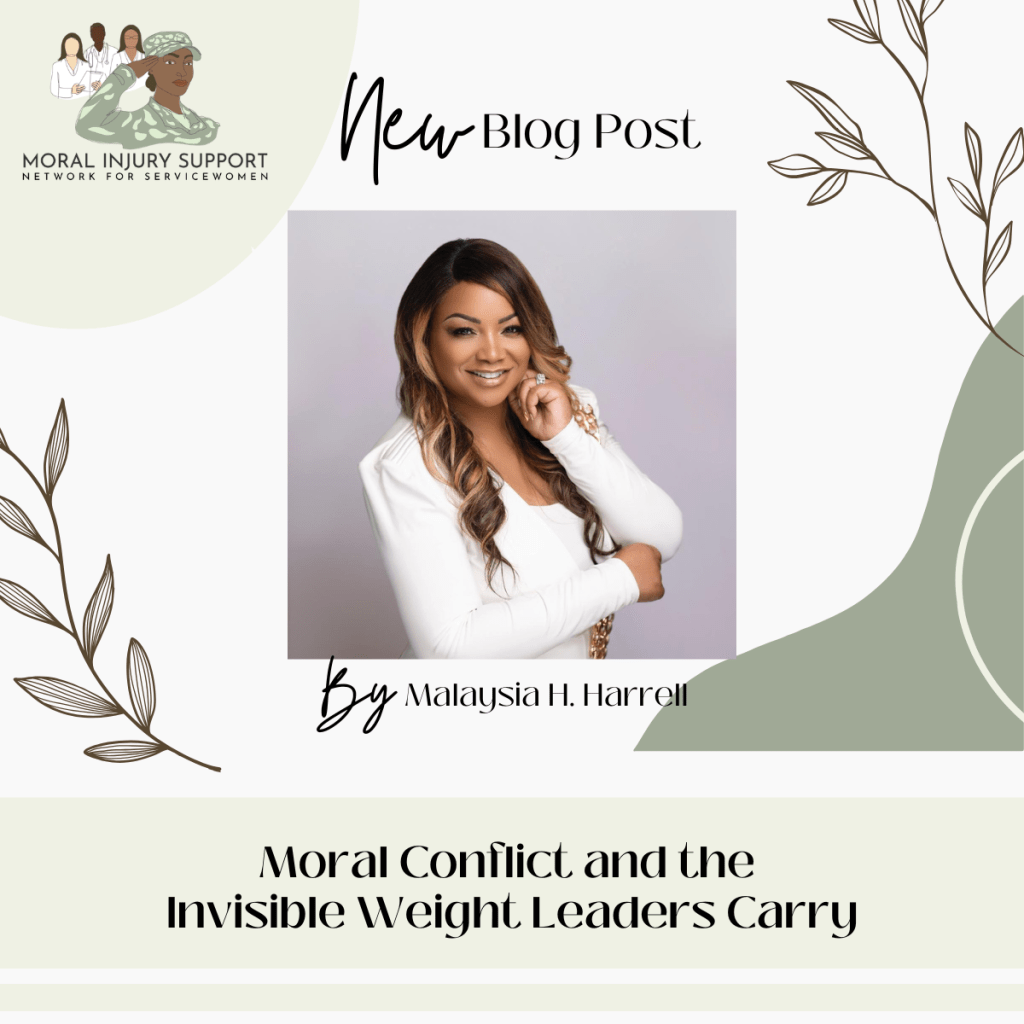
Malaysia Harrell is a board-certified psychotherapist, keynote speaker, author, U.S. military veteran, and
founder of Blissful Life Consulting, the Align Success Academy and the Malaysia Harrell
Foundation. Her work sits at the intersection of mental health, leadership development, and
nervous system regulation, helping high-performing leaders lead with emotional intelligence,
clarity, and sustainable presence under pressure.
Contact:
Email: info@malaysiaharrell.com
Website: www.malaysiaharrell.com
Phone: +1(301)458-8844