Professional Training & Moral Injury Certification
From Hidden Wounds to Holistic Healing: Expert Training in Moral Injury

Empowering educators, clinicians, and military leaders with the neurobiological and spiritual frameworks needed to navigate the complex landscape of moral injury.
Understanding the Wound to the Soul
Moral injury is more than a clinical diagnosis; it is the psychological and spiritual impact of trauma that shatters core moral beliefs. Unlike PTSD, which is rooted in fear, moral injury is rooted in betrayal, guilt, and the violation of one’s deeply held values.
- For Educators: Address how parental moral injury disrupts child development.
- For Clinicians: Bridge the gap between neurobiology and the soul.
- For Leaders: Identify ‘unseen’ moral risks that impact unit readiness.
- For Chaplains/Clergy: Facilitate healing.
The Gold Standard in Moral Injury Education
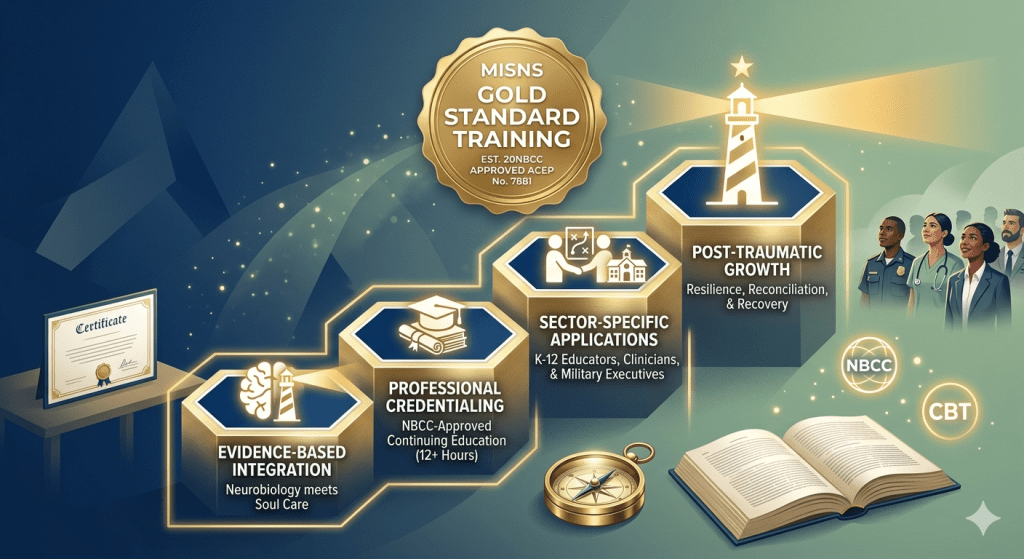
- NBCC Approved: Our programs, including The Healing Path Project, are officially recognized by the National Board for Certified Counselors (ACEP No. 7881), meeting rigorous national standards.
- Combined Holistic Approach: We are pioneers in bridging the gap between clinical mental health and spiritual reconciliation, addressing both the neurobiological and moral impacts of trauma.
- Tailored for Every Mission: Our 12+ hours of advanced training are mission-specific, empowering educators, clinicians, and military executives with specialized strategies, not generic theory.
- Decisive Leadership Frameworks: For military commanders, we shift beyond awareness to decisive leadership action, providing structured 30-day plans to proactively improve the ethical climate.
The Training Catalog
Audience: K-12 Educators, Administrators, and School Staff.
Stop managing behavior; start optimizing brain health.
Implement Brain Co-Regulation Techniques: Master concrete methods to stabilize student dysregulation by applying neurobiological frameworks (Brain Reset).
Adapt School Policy for ACEs: Collaborate to revise organizational policies, shifting from punitive models to brain-health-focused, trauma-informed structures.
Bridge the Parental Moral Injury Gap: Identify behavioral shifts in students caused by parental moral injury and deploy support protocols for military family caregivers.
Audience: Licensed Professional Counselors, Social Workers, and psychologists.
Gain advanced clinical mastery for the unseen wound.
Master Complex Assessment & Intervention: Deploy advanced clinical skills in EMDR, Play Therapy, CBT, and ACT specialized for moral injury and military grief.
Earn NBCC-Approved Continuing Education: Complete 12+ hours of rigorous professional development (ACEP No. 7881) for licensure renewal.
Facilitate Post-Traumatic Growth: Transition beyond trauma management to foster narrative reconciliation and meaning-making in military personnel.
Audience: Military, VA, and civilian chaplains; clergy; spiritual care providers.
Heal the unseen wound through spiritual reconciliation.
- Master Spiritual Distress Assessment: Deploy specialized techniques to differentiate moral injury from traditional grief, identifying moral distress from a spiritual perspective.
- Integrate Narrative Healing Practices: Facilitate post-traumatic growth by guiding stories of trauma toward meaning-making, forgiveness, and inner peace.
- Cultivate Community Spiritual Resilience: Equip spiritual care providers with frameworks to foster personal and community resilience, moving beyond crisis intervention to sustained spiritual health.
Audience: Military Commanders, Unit Leaders, Ethics Officers, Organizational Consultants.
Moral injury is a readiness issue. See what others miss.
Map and Mitigate Unit-Level Moral Risk: Identify leadership-driven risk factors (e.g., betrayal of trust, systemic failures) specific to your operational environment.
Decode Behavioral Indicators in High Performers: Train to recognize hidden signs of moral injury that are often misidentified as simple misconduct or PTSD in top-performing personnel.
Implement a Structured 30-Day Action Plan: Master ethical decision-making frameworks to navigate ambiguous situations and create concrete commitments that improve the ethical climate of your command.
Audience: Case Managers, Care Coordinators, Advocates, and Support Staff.
Advocacy is the first step toward restoration.
Identify “Moral Distress” Indicators: Recognize the specific linguistic and behavioral cues of moral injury (e.g., expressions of “betrayal,” “shame,” or “unworthiness”) that differ from standard PTSD symptoms.
Implement Ethical Triage Protocols: Learn to screen for moral injury during initial intakes and case reviews to ensure service members are routed to appropriate spiritual or clinical specialized care.
Mitigate Secondary Traumatic Stress: Develop personal resilience strategies to handle “empathic strain” when navigating the complex moral narratives and systemic betrayals often reported by clients.
Transparent Investment & Logistics
Professional Training Rate
- $25 / Person / Hour
- Competitive, scalable pricing for specialized, NBCC-approved professional development.
Logistic Support & Materials
- $3,000 Flat Rate
- Covers all travel, lodging, and high-quality physical training materials for our two-person expert team within the continental US. No hidden fees or surprise invoices.
The Multi-Disciplinary Edge
- Always a Pair
- Every session is co-facilitated by two subject matter experts (Clinical + Spiritual/Leadership) to ensure a holistic, safe, and deep learning environment.
The 12-Hour Signature Standard: Our gold-standard engagement is a 12-hour intensive ($300 per person + $3,000 team flat rate). This allows for full mastery of the MISNS framework. However, we are mission-adaptive; we can customize subjects and duration to fit your organization’s specific timeline and goals. For global units or remote teams, we offer high-impact virtual training packages that maintain the same interactive rigor as our in-person sessions.
Need a custom training duration or a specific subject focus?
Our Team and Training Partners

Dr. Daniel L. Roberts
President & CEO
Daniel possesses over 20 years of expertise in providing unparalleled emotional and spiritual support to armed forces personnel. As a distinguished mentor, he imparts invaluable wisdom to military, VA, and civilian chaplains, shaping their capabilities through conferences, instruction, and one-on-one coaching. His remarkable contributions extend to esteemed publications such as “Providing Chaplain Support to Morally Injured Servicewomen” (Allons-y Journal of Children, Peace and Security) and “Male Chaplains and Female Soldiers: Are There Gender and Denominational Differences in Military Pastoral Care?” (Journal of Pastoral Care and Counseling). Holding a doctorate of management in organizational leadership from the University of Phoenix, Daniel’s profound knowledge and passion for empowering others make him an exceptional asset.
Contacts: droberts@misns.org, 910-701-0306
Dr. Kirby L. Wycoff
Dr. Kirby L. Wycoff is an Associate Professor and Nationally Certified School Psychologist at Thomas Jefferson University. Her expertise lies in trauma, adversity, and policy within a public health framework. She authored “Trauma Informed Assessment and Intervention in School and Community Settings” and regularly publishes on psychology, public health, and trauma. Dr. Wycoff holds a PsyD from Rutgers University, an MEd from Columbia University, and a BA from Lehigh University. She also has an MPH from Dartmouth College’s Geisel School of Medicine. Dr. Wycoff is involved in various community service and policy initiatives, including being a co-chair for the National Association of School Psychology’s Trauma and Child Maltreatment Interest Group

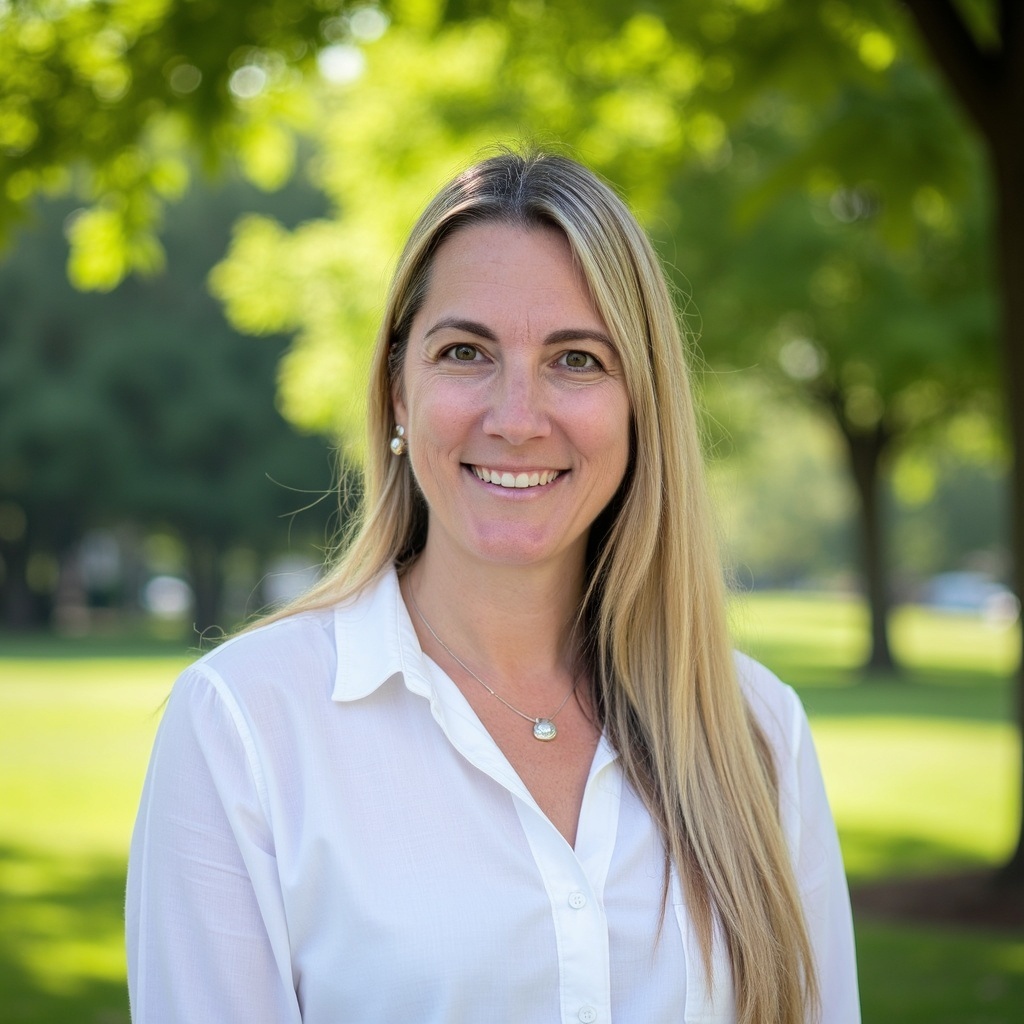
Gina Hernandez, MA, LPC, CCTP
Gina Hernandez, MA, LPC, CCTP has more than 20 years of experience working with children and families. Gina has a BA in Communications, an MA in Counseling and is a Licensed Professional Counselor certified to provide therapy in New Jersey, Pennsylvania and Florida. She is a Certified Clinical Trauma Professional and earned a Post Masters Certificate in Trauma: Clinical Foundations. She is a co-developer of the Trauma Transformation Initiative, the Healing Hearts and Building Resilience curriculum and several workshops on Domestic Minor Sex Trafficking. She is also published for her work on addressing maternal depression as well as the effectiveness of ways to mitigate behavioral challenges in schools using a trauma informed lens. Gina currently serves as the CEO/Executive Director of the non-profit Prevent Child Abuse NJ and the Child Wellness Institute. She also runs a private practice where she uses EMDR, Cognitive Behavioral Therapy, Acceptance and Commitment Therapy and several other modalities focusing mainly on supporting survivors of trauma. Gina holds the NATC (Narcissistic Abuse Treatment Clinician) Certification.
Jamie Peer, LTC (ret.), U.S. Army
Jamie Peer (LTC, ret.) is a seasoned leader and executive coach with over 23 years of successful Active Duty Army service. Throughout her distinguished military career, she held command and senior leadership positions, including oversight of a directorate with 10,000 personnel. This extensive experience provided her with a front-row seat to the power of human potential and ingrained in her a commitment to clear communication, transparency, and intentionality. Since retiring in 2019, Jamie has transitioned her leadership expertise into the entrepreneurial and coaching spaces, launching four successful businesses, including a nature retreat center and an executive coaching firm. Her unique background allows her to bridge the gap between rigorous military discipline and transformative executive development, making her a vital asset as a trainer for the Moral Injury Support Network for Servicewomen, Inc.